
Best Interview Preparation Books for Job Seekers: What to Read Before Your Next Interview
Compare interview preparation books for U.S. job seekers, from general interview guides to technical and leadership resources. Learn how to prepare STAR answers, practice common questions, handle remote interviews and choose the right book for your next job interview. Primary Keyword: best interview preparation books
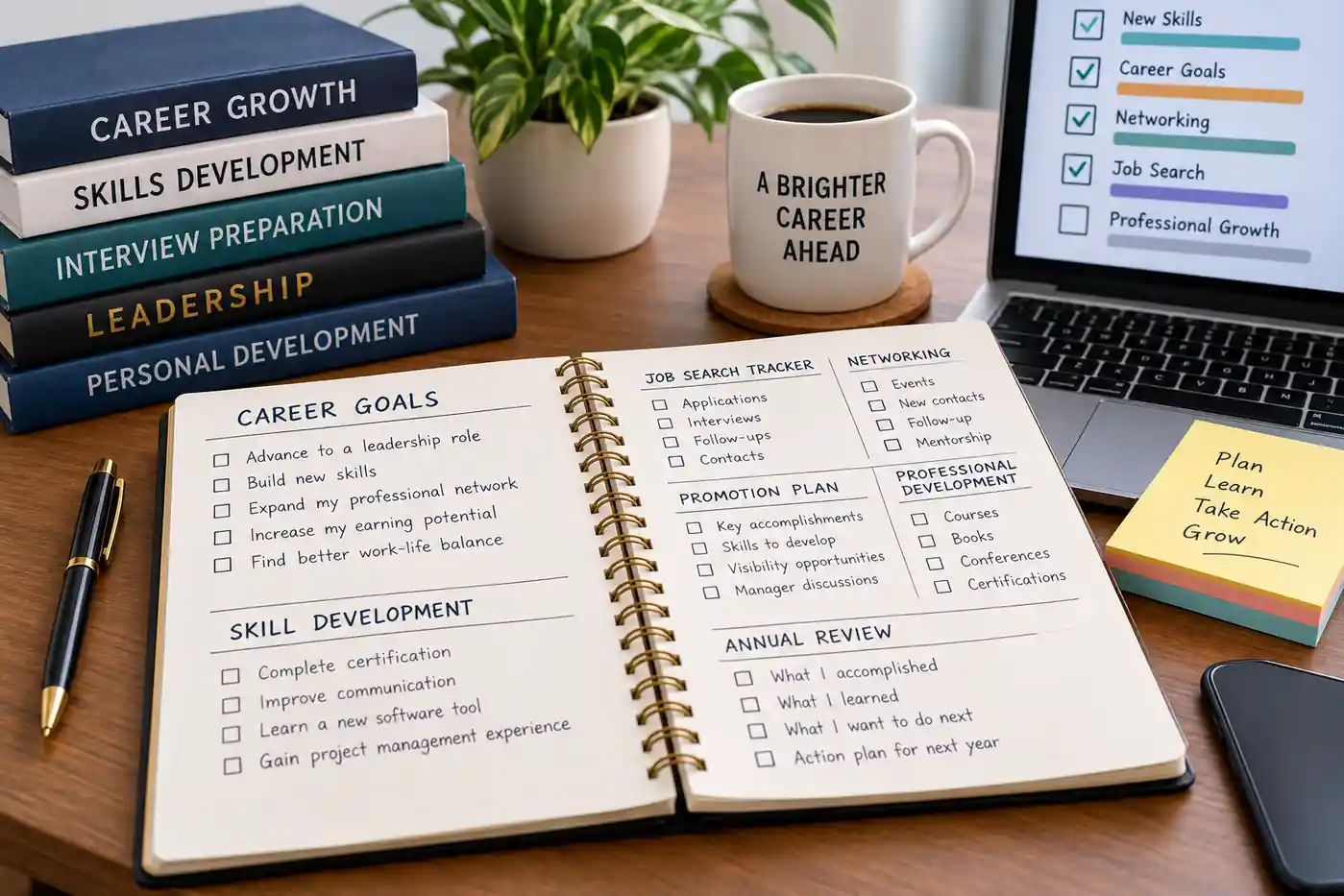
A job interview is more than an opportunity to discuss your resume. It's your chance to explain your experience, demonstrate your problem-solving abilities, and show an employer how you could contribute to the role.
But knowing your subject and explaining it confidently are two different skills. Even experienced professionals can struggle with behavioral questions, unexpected follow-ups, technical assessments, or explaining why they want to change jobs.
The right interview preparation book can help you structure your answers, recognize common question patterns, and practice communicating your accomplishments without sounding rehearsed.
This CoreAdorn guide covers interview preparation books for U.S. job seekers, including recent graduates, career changers, technical candidates, managers, and experienced professionals.
For resources covering the broader job-search process, career development, and professional growth, explore our Personal Finance & Career guide.
Quick Answer: Which Interview Preparation Book Should You Choose?
- General job interviews: Choose a book covering common interview questions, employer expectations, and answer preparation.
- Behavioral interviews: Look for guidance on the STAR method, accomplishment stories, and experience-based questions.
- Technical interviews: Choose a resource specific to your profession, such as coding, system design, or technical problem-solving.
- Leadership interviews: Prioritize books covering management experience, decision-making, communication, and organizational impact.
- Career changers: Look for resources that help you explain transferable skills and career transitions.
- Recent graduates: Focus on books that help turn academic projects, internships, and limited work experience into convincing interview examples.
Reading is only part of preparation. A book becomes more useful when you practice answering questions aloud, conduct mock interviews, and research the specific employer.
When you buy through links on our site, we may earn an affiliate commission at no extra cost to you. This helps support our work.
Who This Article Is For
This guide is designed for U.S. job seekers who are preparing for their first interview, returning to work, changing careers, applying for technical positions, or pursuing management and leadership roles.
It is also useful for professionals who haven't interviewed in several years and want to refresh their communication skills.
If you're managing several applications or planning a career transition, our guide to career planners for professionals can help you track applications, interviews, networking contacts, and professional-development goals.
How Interview Preparation Books Help
Interview preparation books are most useful when they teach you how to think about questions rather than simply provide answers to memorize.
A good book can help you understand what an interviewer is evaluating, identify relevant examples from your experience, and organize your thoughts before answering.
Books can also help you prepare for unfamiliar interview formats, including panel interviews, behavioral interviews, technical assessments, and conversations with senior leadership.
However, no book can predict every question or guarantee a job offer. Interview expectations vary by employer, industry, seniority, and role.
The most effective approach combines reading with job-specific research, structured practice, and feedback.
Types of Interview Preparation Books
| Book Category | Best For | What to Look For |
|---|---|---|
| General interview guides | Most job seekers | Common questions and answer strategies |
| Behavioral interview guides | Experience-based interviews | STAR examples and storytelling |
| Technical interview books | Engineering and IT roles | Coding, algorithms and problem-solving |
| Leadership interview resources | Managers and executives | Decision-making, team leadership and impact |
| Career-transition guides | Career changers | Transferable skills and career narratives |
| Communication books | Candidates who struggle to explain ideas | Clarity, listening and concise answers |
You may need more than one resource if your interview includes several stages. A software engineer, for example, may benefit from both a coding interview book and a general behavioral interview guide.
Important Criteria When Choosing an Interview Preparation Book
Relevance to Your Target Role
A general interview book may be enough for an administrative position, but a software engineering interview usually requires additional technical preparation.
Practical Exercises
Look for sample questions, frameworks, worksheets, or practice activities rather than relying exclusively on motivational advice.
Author Background
Consider whether the author has relevant experience in recruiting, hiring, career coaching, or the specific profession covered.
Edition and Publication Date
Interview fundamentals remain useful, but technical questions, hiring platforms, and recruiting practices can change. Check the current edition and contents before purchasing.
Depth
Some books offer quick preparation for an upcoming interview, while others require several weeks of structured practice.
Your Main Weakness
If you already communicate confidently but struggle with technical assessments, another general interview book may not be a worthwhile purchase.
Interview Preparation Books Compared by Use Case
| Book | Best For | Key Consideration |
|---|---|---|
| 60 Seconds and You're Hired! | General interview preparation | Emphasizes concise, persuasive answers |
| 101 Great Answers to the Toughest Interview Questions | Common interview questions | Broad question-and-answer preparation |
| Why You? | Understanding interview questions | Helps candidates interpret employer questions |
| Cracking the Coding Interview | Software engineering | Requires hands-on technical practice |
| Decode and Conquer | Product management | Specialized PM interview frameworks |
| The Manager's Path | Technical leadership | Leadership development, not a dedicated interview workbook |
Recommended Interview Preparation Books by Use Case
1. For General Interviews: 60 Seconds and You're Hired!
Author: Robin Ryan
This book focuses on presenting your qualifications clearly and making your answers relevant to the employer. The revised edition covers Ryan's 60 Second Sell and 5-Point Agenda, along with difficult interview questions, behavioral interviews, questions to ask employers, and salary discussions.
Best suited for: Job seekers who want a structured approach to general interviews, particularly when they struggle to explain their value concisely.
Topics covered: Interview communication, difficult questions, behavioral interviews, employer questions, and salary discussions.
Strengths: Practical communication frameworks, broad interview coverage, and attention to presenting relevant qualifications.
Limitations: It is not a specialized resource for coding assessments, technical case studies, or industry-specific examinations.
Who should consider it: Professionals preparing for recruiter screenings, hiring-manager interviews, or general corporate positions.
Who may want an alternative: Candidates who already handle general interviews confidently but need technical or role-specific preparation.
2. For Common Interview Questions: 101 Great Answers to the Toughest Interview Questions
Author: Ron Fry
Ron Fry's guide explores frequently encountered interview questions and what employers may be trying to learn from a candidate's answers.
Best suited for: Recent graduates, returning workers, and professionals who want to prepare for a broad range of interview questions.
Topics covered: Common interview questions, difficult questions, employer expectations, and approaches to structuring answers.
Strengths: Question-focused organization makes it useful for targeted preparation and repeated practice.
Limitations: Example answers should be adapted to your own experience. Memorizing them word for word can make responses sound unnatural.
Who should consider it: Candidates who feel unprepared for unexpected questions or haven't interviewed recently.
Who may want an alternative: Applicants who need detailed technical exercises or preparation for specialized industry interviews.
3. For Understanding Interview Questions: Why You?: 101 Interview Questions You'll Never Fear Again
Author: James Reed
This book is organized around interview questions and helps candidates think about the purpose behind them. It is useful for preparing thoughtful responses rather than relying on a single memorized script.
Best suited for: Candidates who want to understand how interview questions relate to their suitability for a role.
Topics covered: Common questions, answer preparation, self-presentation, and interview communication.
Strengths: A question-based approach makes it easy to identify areas that need practice.
Limitations: It does not replace profession-specific preparation or practical technical assessments.
Who should consider it: Early-career candidates, career changers, and people returning to the job market.
Who may want an alternative: Candidates who primarily need coding exercises, case interviews, or senior leadership scenarios.
Check the current edition and format on the retailer's listing.
4. For Software Engineering: Cracking the Coding Interview
Author: Gayle Laakmann McDowell
This is a specialized resource for software engineering candidates preparing for coding and algorithm-based interviews. It focuses on technical problem-solving rather than general interview communication.
Best suited for: Software engineers, computer science graduates, and developers preparing for coding interviews.
Topics covered: Data structures, algorithms, coding problems, technical problem-solving, and interview preparation.
Strengths: Its exercise-based approach supports deliberate practice and helps candidates explain their reasoning while solving problems.
Limitations: It requires a foundation in programming. Some examples and hiring-process details may differ from current employer practices, so supplement it with up-to-date role-specific preparation.
Who should consider it: Candidates expecting live coding, algorithm questions, or technical whiteboard-style exercises.
Who may want an alternative: Applicants for noncoding IT roles or positions that emphasize system design, infrastructure, or domain-specific expertise.
5. For Product Management: Decode and Conquer
Author: Lewis C. Lin
Decode and Conquer focuses on product management interviews, including structured approaches to product-design questions. The author's fifth-edition description includes updated frameworks and material addressing AI-related product management.
Best suited for: Product managers and candidates transitioning into product management.
Topics covered: Product interview frameworks, product-design questions, structured reasoning, and approaches to communicating product decisions.
Strengths: Specialized material makes it more relevant to PM interviews than a general job-interview book.
Limitations: Frameworks can help organize thinking, but rigidly applying them without considering the actual question can weaken an answer.
Who should consider it: Candidates preparing for product-design and product-thinking interviews.
Who may want an alternative: Candidates pursuing engineering, finance, sales, or general management positions.
Check the edition before purchasing because the content differs between editions.
6. For Technical Leadership: The Manager's Path
Author: Camille Fournier
The Manager's Path explores technical leadership and the transition through different levels of engineering management. It is a professional-development resource that can help candidates reflect on their management experience before a leadership interview.
Best suited for: Engineering managers, technical leads, and software professionals preparing for leadership responsibilities.
Topics covered: Mentoring, managing people, technical leadership, team development, and organizational growth.
Strengths: Provides material for reflecting on leadership responsibilities and developing examples from management experience.
Limitations: It is not a dedicated interview preparation workbook and does not provide comprehensive interview-question practice.
Who should consider it: Technical professionals preparing to discuss their leadership approach and management experience.
Who may want an alternative: Candidates who need direct practice with behavioral interview questions or who work outside technical leadership.
How to Prepare for Behavioral Interviews
Behavioral interviews ask you to describe how you handled situations in the past.
Employers may use them to explore your communication, judgment, problem-solving, teamwork, adaptability, and leadership experience.
Common questions include:
- Tell me about a time you handled a difficult deadline.
- Describe a disagreement with a coworker.
- Give an example of a mistake you made.
- Tell me about a time you demonstrated leadership.
- Describe a situation where you had to learn something quickly.
- Tell me about a project that didn't go as planned.
The goal is to explain what happened, what you personally contributed, and what the experience demonstrates.
Using the STAR Method
The STAR method is a practical framework for organizing behavioral answers.
- Situation: Explain the relevant background and context.
- Task: Describe your responsibility or the challenge you needed to address.
- Action: Explain the specific steps you personally took.
- Result: Describe the outcome and what you learned.
For example, suppose an interviewer asks about handling a difficult deadline.
A candidate might describe a project with a shortened delivery schedule, explain their responsibility, discuss how they reorganized priorities and coordinated with colleagues, and describe the actual outcome.
Use real details and measurable results when you have them. Don't invent percentages or claim responsibility for work completed by others.
The STAR method is a framework, not a script. Your answer should still sound like a natural conversation.
Preparing for Technical Interviews
Technical interviews differ significantly across professions.
A software developer may face coding exercises, while a financial analyst may be asked to interpret financial statements or explain a financial model. A cybersecurity candidate may need to discuss incident response, network security, or threat analysis.
Prepare for the actual requirements of the role.
- Review the job description and identify the core technical requirements.
- Refresh relevant foundational knowledge.
- Practice problems that reflect the expected interview format.
- Explain your reasoning aloud while solving problems.
- Prepare examples of real projects and technical decisions.
- Practice discussing trade-offs, limitations, and alternative solutions.
A general interview book can help with communication, but it cannot replace profession-specific technical preparation.
Leadership Interview Preparation
Leadership interviews usually require more than describing your individual accomplishments.
Candidates may need to discuss how they make decisions, develop employees, resolve disagreements, manage priorities, and deliver results through a team.
Prepare examples covering:
- Leading a challenging project
- Managing competing priorities
- Giving constructive feedback
- Handling conflict
- Developing team members
- Responding to a setback
- Managing organizational change
- Making decisions with incomplete information
For each example, be clear about your responsibilities, your reasoning, the actions you took, and the outcome.
Candidates moving into their first management role can draw on mentoring, project coordination, cross-functional collaboration, and other experiences that demonstrate leadership without claiming formal management responsibilities they haven't held.
Communication Skills That Matter in Interviews
A strong interview answer is not necessarily a long answer.
Interviewers need enough information to understand your experience, but excessive detail can obscure your main point.
- Listen to the entire question before answering.
- Ask for clarification when necessary.
- Start with a direct response.
- Use a relevant example.
- Explain your individual contribution.
- Avoid unnecessary jargon.
- Stop when you've answered the question.
For questions about your accomplishments, distinguish between what your team achieved and what you personally did.
For questions about weaknesses or setbacks, focus on accurate self-reflection and what changed afterward.
Common Interview Questions to Prepare For
Tell Me About Yourself
Prepare a concise professional introduction covering your relevant background, current experience, and interest in the role. Avoid giving a complete chronological account of your personal life.
Why Do You Want This Job?
Connect your experience and interests to the responsibilities of the position. Research the employer so your answer is specific.
Why Are You Leaving Your Current Job?
Give an accurate, professional explanation. Focus on your reasons for seeking a new opportunity without inventing a story or unnecessarily criticizing others.
What Are Your Strengths?
Choose strengths relevant to the role and support them with real examples.
What Is Your Greatest Weakness?
Discuss a genuine development area and explain what you're doing to address it. Avoid presenting a strength disguised as a weakness.
Tell Me About a Failure
Choose a meaningful example, take responsibility for your contribution, and explain what you learned or changed.
Why Should We Hire You?
Summarize the relevant skills, experience, and evidence that connect your background to the employer's needs.
What Are Your Salary Expectations?
Research compensation for the role, location, and experience level. Prepare to discuss your expectations without treating a generic interview-book answer as personalized compensation advice.
For more on preparing for compensation discussions, see our salary negotiation books and resources .
Mock Interviews: Turning Reading Into Practice
A mock interview gives you an opportunity to practice answering questions before speaking with an employer.
You can practice with a trusted friend, mentor, career counselor, or professional interview coach.
A useful mock interview should reflect the actual position and interview format.
Ask your practice partner to evaluate:
- Whether you answered the question
- How clearly you explained your experience
- Whether your examples were relevant
- Whether you communicated your individual contribution
- Whether your answers were concise
- How you handled follow-up questions
If you record a practice session, review it for clarity and pacing rather than trying to eliminate every natural pause.
One well-structured mock interview with specific feedback can reveal preparation gaps that reading alone may not uncover.
Preparing for Interview Anxiety
Feeling nervous before an interview is common. The goal is not to eliminate every sign of nervousness but to prepare well enough that you can communicate despite it.
- Research the employer in advance.
- Practice your professional introduction.
- Prepare several relevant accomplishment stories.
- Conduct mock interviews.
- Confirm interview logistics.
- Allow enough time to arrive or connect.
- Keep brief notes where appropriate.
Avoid trying to memorize dozens of complete answers. That can make an unexpected follow-up more difficult.
Instead, prepare the key points of your stories and practice expressing them in different ways.
If anxiety is severe or persistently interferes with daily functioning, a qualified healthcare professional can provide individualized support.
Questions to Ask Employers
An interview is also your opportunity to evaluate the position.
Prepare several questions that reflect your priorities and the information you still need.
- What would success look like during the first 90 days?
- What are the team's immediate priorities?
- What challenges would the person in this role need to address?
- How is performance evaluated?
- How does the team collaborate?
- What professional-development opportunities are available?
- What are the next steps in the hiring process?
For a leadership role, you might also ask about team structure, decision-making responsibilities, and organizational priorities.
Avoid asking questions solely because a book recommends them. Choose questions that help you make an informed decision about the opportunity.
Remote Interview Preparation
Remote interviews require the same substantive preparation as in-person interviews, plus a few technical checks.
- Test your camera and microphone.
- Confirm the meeting platform works.
- Check your internet connection.
- Choose a quiet, appropriately lit location.
- Position the camera at a comfortable height.
- Close unrelated applications and notifications.
- Keep the job description and relevant notes accessible.
- Have a backup contact method available if the connection fails.
Practice looking toward the camera while speaking, but don't force constant eye contact.
If you need equipment for a more reliable interview setup, CoreAdorn's home office products for remote workers guide can help you evaluate practical options.
How to Choose the Right Interview Book
Start by identifying the main challenge you're trying to solve.
If you have limited interview experience, begin with a general interview guide.
If you struggle with experience-based questions, prioritize behavioral interview practice and the STAR method.
If you're applying for software engineering or product management positions, choose technical resources aligned with the actual interview format.
If you're preparing for management, develop leadership examples and practice discussing your decisions and their consequences.
If you're changing careers, focus on communicating transferable skills, relevant accomplishments, and your reasons for pursuing the new field.
One carefully chosen book, combined with consistent practice, may be more useful than buying several books that cover the same material.
Who Should Buy an Interview Preparation Book?
A book can be a useful purchase if you're interviewing for the first time, haven't interviewed recently, struggle to structure answers, need specialized technical preparation, or want a repeatable practice method.
Who Can Skip Buying One?
You may not need another book if you already have relevant preparation materials, receive detailed feedback from mock interviews, or primarily need practice rather than additional reading.
Candidates facing a highly specialized assessment may benefit more from role-specific exercises, technical documentation, or professional coaching.
Alternatives to Interview Preparation Books
Books aren't the only preparation resource.
A university career center can be useful for students and recent graduates. Professional associations may provide industry-specific resources, while mentors and former colleagues can offer insights into particular roles.
Other options include mock interviews, employer-provided preparation materials, online courses, coding-practice platforms, and structured practice with a trusted colleague.
Choose the resource that addresses your actual preparation gap rather than accumulating materials you won't use.
Common Interview Preparation Mistakes
Memorizing Answers
Learn the structure of a good response, but use your own words and experiences.
Ignoring the Job Description
Your preparation should reflect the responsibilities and qualifications of the specific role.
Preparing Only for Technical Questions
Technical knowledge matters, but communication, collaboration, and professional judgment may also be evaluated.
Giving Vague Examples
Explain what you personally did and describe the actual outcome.
Skipping Mock Interviews
Reading about interviewing is different from answering questions under realistic conditions.
Failing to Research the Employer
Understand the organization's work and the responsibilities of the position.
Preparing No Questions
Use the interview to gather information that matters to your decision.
Neglecting the Follow-Up
Keep track of next steps and send any appropriate follow-up communication.
Frequently Asked Questions
Are interview preparation books worth buying?
Interview preparation books can be useful if they address a specific weakness, such as answering behavioral questions, communicating accomplishments, or preparing for technical assessments. They provide structure and examples, but reading alone is unlikely to be sufficient. Choose a relevant book and combine it with employer research, spoken practice, and mock interviews.
Which interview preparation book is suitable for beginners?
A general interview guide such as 101 Great Answers to the Toughest Interview Questions by Ron Fry or 60 Seconds and You're Hired! by Robin Ryan can provide a starting point. These books address common interview questions and answer preparation. Beginners should adapt the guidance to their own experience rather than memorizing sample responses.
How do I prepare for behavioral interview questions?
Identify several genuine experiences involving teamwork, problem-solving, conflict, leadership, mistakes, and accomplishments. Use the STAR method to organize each example into Situation, Task, Action, and Result. Practice explaining your individual contribution and the outcome. Prepare flexible stories that can address related questions rather than memorizing a separate script for every possible question.
How long should I prepare for a job interview?
Preparation time depends on the role, your experience, and the interview format. A general screening interview may require less preparation than a multi-stage technical or leadership interview. Begin by reviewing the job description, researching the employer, preparing relevant examples, and identifying areas that need additional practice. Technical assessments may require a longer preparation schedule.
Can interview preparation books help with career changes?
Yes. General interview books can help career changers explain transferable skills, discuss relevant accomplishments, and prepare for questions about their transition. However, candidates should also research their target industry and understand its expectations. A specialized resource may be necessary when the new role requires technical knowledge, certifications, or profession-specific assessments.
Should I memorize answers to common interview questions?
Memorizing complete answers is generally less flexible than learning the key points you want to communicate. Prepare accurate examples, understand their relevance, and practice expressing them naturally. This makes it easier to respond when an interviewer changes the wording, asks a follow-up question, or requests a different example.
How can I prepare for an online job interview?
Test your internet connection, microphone, camera, and meeting software before the interview. Choose a quiet location, check the lighting, and minimize distractions. Keep the job description and a few brief notes accessible. Practice answering questions on camera and confirm the interview time, time zone, meeting link, and backup contact information.
What should I do if I don't know the answer to an interview question?
Avoid inventing an answer or pretending to have experience you don't possess. Ask for clarification if the question is unclear. For a technical problem, explain your reasoning and what you would investigate. For an experience-based question, you can acknowledge the limitation and discuss a genuinely relevant situation, transferable skill, or approach.
Final Thoughts
The most useful interview preparation resource is the one that addresses the interview you're actually facing.
A general interview guide can help you organize answers and communicate your experience. Behavioral interview preparation helps you develop relevant stories, while specialized technical resources support role-specific assessments.
Choose your resources deliberately, practice aloud, and spend time understanding the employer and position.
For broader career planning, explore CoreAdorn's Personal Finance & Career resources . If you're organizing an active job search, our career planner guide can help you track applications and interviews, while our salary negotiation resources cover preparation for compensation discussions.
Product editions, formats, and availability can change. Verify the current manufacturer's, publisher's, or retailer's listing before purchasing.
CoreAdorn is reader-supported. When you buy through links on our site, we may earn an affiliate commission.
0 Comments
Be the first to comment.
Leave a comment
Please use kind words and keep your comment on topic. Comments are reviewed by the CoreAdorn team before they appear.