
Indoor Plants and Houseplants: The Complete U.S. Buyer's and Care Guide
A practical guide to choosing, buying, watering, and caring for indoor plants and houseplants in U.S. homes. Learn how to match plants to your light, avoid common care mistakes, and choose varieties that fit your space and lifestyle.
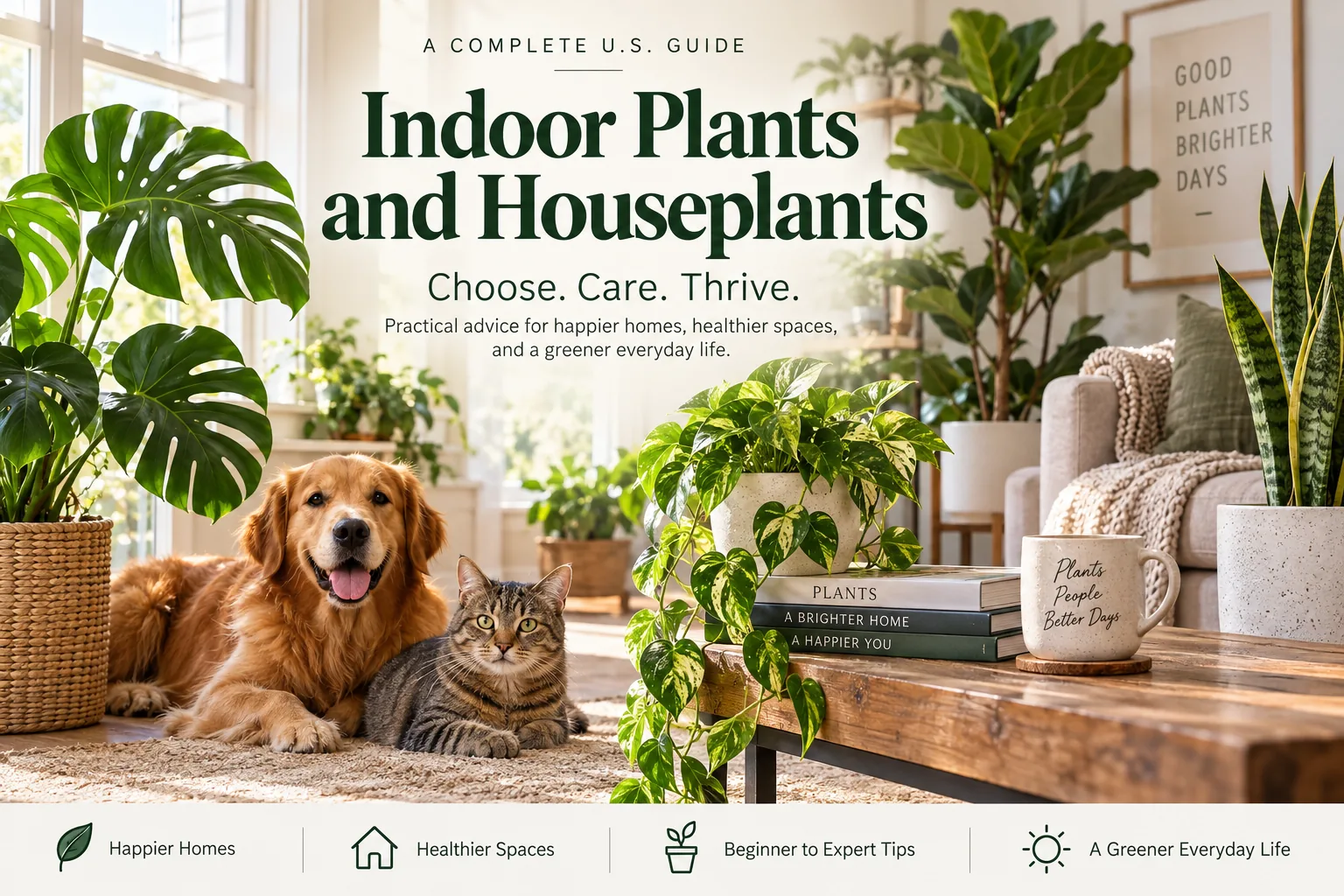
Indoor Plants and Houseplants: What You Need to Know
Indoor plants have become a practical part of U.S. home life, from small apartment windowsills to large living-room statement plants. The right houseplants can add greenery, create a more comfortable living environment, and provide a simple daily routine that many people find relaxing.
The key is matching the plant to your home rather than forcing your home to accommodate a plant. Light exposure, temperature, humidity, watering habits, pets, and available space all affect whether a houseplant thrives.
Quick Summary: Choose an indoor plant based first on the amount and type of natural light available, with bright indirect light working well for many popular houseplants. Water thoroughly only when the soil has reached the appropriate level of dryness for that plant, and never leave the roots sitting in stagnant water. For the safest purchase, inspect plants at reputable local nurseries, garden centers, big-box stores, or established online sellers for pests, healthy roots, and accurate plant identification.
Assessing Your Home's Light and Environment
Light is the first factor to evaluate when choosing a houseplant because a plant cannot compensate for a fundamentally unsuitable light level.
A room that feels bright to you may still be relatively dim for a plant. Indoor light intensity drops sharply as you move away from a window, even when the room appears well lit.
South- and West-Facing Windows
South-facing windows generally provide the strongest natural light in U.S. homes, although actual intensity varies with season, latitude, window glass, blinds, trees, and nearby buildings.
West-facing windows can also receive strong afternoon sunlight. Plants that tolerate higher light can often perform well near these windows, but sensitive foliage may need to be positioned farther back or protected with a sheer curtain.
Bright indirect light generally means strong ambient daylight without prolonged exposure to harsh direct sunlight hitting the leaves.
North-Facing Windows
North-facing windows generally provide lower and more consistent light, particularly in northern parts of the United States during winter.
This can work well for plants that tolerate lower light, such as snake plants and ZZ plants. However, low light does not mean no light.
A plant placed in a dark hallway with no meaningful daylight may survive for a while, but growth will usually be slow and weak.
East-Facing Windows
East-facing windows are often useful for houseplants because they receive gentler morning sunlight.
Many tropical foliage plants can perform well near an east-facing window, particularly when the window provides several hours of usable daylight without intense afternoon exposure.
Heating and Air Conditioning
Heating and air-conditioning systems can stress houseplants by creating dry air and rapid temperature changes.
A plant positioned directly beside a forced-air heating vent, air conditioner, or radiator can experience rapid moisture loss from its foliage and soil.
Winter radiator dryness can be especially noticeable in heated homes where indoor humidity falls substantially.
Do not place plants directly against a radiator or in the path of a strong HVAC stream. Moving the plant several feet away can make a meaningful difference.
For a deeper dive into decoding your home's natural light levels, read our comprehensive Guide to Houseplant Light Requirements .
When you buy through links on our site, we may earn an affiliate commission at no extra cost to you. This helps support our work.
Unkillable Beginner Houseplants for U.S. Apartments
Snake plants, ZZ plants, and pothos are among the easiest popular houseplants for beginners because they tolerate inconsistent care better than many demanding tropical varieties.
No houseplant is literally unkillable. Even tough plants will eventually fail if they receive no usable light, remain waterlogged, or are exposed to extreme temperatures.
| Plant | Light | Watering | Growth Habit | Beginner Friendly |
|---|---|---|---|---|
| Snake Plant | Low to bright indirect | Allow soil to dry substantially | Upright | Yes |
| ZZ Plant | Low to bright indirect | Infrequent; allow soil to dry | Upright and spreading | Yes |
| Pothos | Low to bright indirect | Water after upper soil dries | Trailing | Yes |
Snake Plant
Snake plants are excellent choices for beginners because they tolerate relatively low light and can handle periods of dry soil.
The botanical name commonly used for the modern snake plant group is Dracaena trifasciata , although older plant labels may still use Sansevieria .
Their upright growth makes them particularly useful in apartments where floor space is limited.
Snake plants generally prefer the soil to dry substantially between waterings. Their thick leaves and underground structures allow them to cope with drought better than many thin-leaved tropical plants.
The biggest mistake is usually excessive watering. If the pot stays wet for extended periods, the roots can deteriorate and the plant may develop root rot .
ZZ Plant
ZZ plants are forgiving houseplants that handle lower light and infrequent watering particularly well.
The ZZ plant, Zamioculcas zamiifolia , stores water in thick underground rhizomes. That storage capacity is one reason it can tolerate periods of neglect.
Place it in indirect light and allow the soil to dry appropriately between thorough waterings. Avoid treating it like a thirsty tropical plant.
ZZ plants are relatively slow growers, so do not assume something is wrong simply because you do not see dramatic new growth every few weeks.
Pothos
Pothos is one of the most adaptable trailing houseplants and can grow in a wide range of indoor light conditions.
Its trailing stems work well on shelves, plant stands, bookcases, and hanging planters.
Pothos can tolerate lower light, although growth and variegation may become less pronounced. Brighter indirect light generally produces stronger growth.
Let the upper portion of the soil dry before watering again, then water thoroughly.
Pothos is popular partly because it is easy to propagate from stem cuttings, making it an inexpensive way to expand a houseplant collection.
Trendy Statement Plants and How to Choose Them
Statement plants can transform a room, but popular varieties such as Monstera deliciosa and fiddle leaf fig require more careful placement and maintenance than beginner plants.
Monstera Deliciosa
Monstera deliciosa prefers bright indirect light, warm conditions, and soil that drains efficiently.
Monsteras can tolerate some lower-light conditions, but inadequate light can lead to slower growth and smaller leaves.
A mature plant may need structural support. A moss pole, trellis, or sturdy stake can help guide the plant upward.
The soil should not remain constantly saturated. At the same time, allowing a large Monstera to become severely dehydrated repeatedly can cause leaf stress.
Monsteras also need enough room to spread. A small apartment can accommodate one, but plan for its mature size rather than buying based solely on the plant's size at the store.
Fiddle Leaf Fig
Fiddle leaf figs can become impressive indoor trees, but they are considerably less forgiving of poor light, inconsistent watering, and sudden environmental changes.
They typically perform best with strong filtered or bright indirect light.
One common mistake is moving a fiddle leaf fig repeatedly around the home. A plant may respond poorly to abrupt changes in light, temperature, or watering.
Large leaves also make problems easy to spot. Brown edges can have several possible causes, including inconsistent moisture, dry indoor air, root problems, or environmental stress.
Yellow leaves may also have multiple causes, so diagnosing the entire growing environment is more useful than assuming every yellow leaf means overwatering.
Fiddle leaf figs require sufficient vertical and horizontal space as they mature.
Struggling with a dramatic plant? Check out our troubleshooting steps in the Ultimate Fiddle Leaf Fig Care Guide .
Critical Care Essentials: Watering and Soil
The safest general watering strategy is to check the soil first, then water thoroughly when the plant has reached its appropriate drying point.
There is no universal houseplant watering schedule.
A plant in a small pot beside a sunny window may need water much more often than the same species growing in a large pot in a dim room.
The Soak-and-Dry Method
Soak-and-dry means watering thoroughly until excess water drains from the bottom of the container, then allowing the soil to dry to the appropriate level before watering again.
When watering, distribute water across the soil rather than repeatedly pouring into one small spot.
Continue until water begins to drain from the drainage holes. Then allow the pot to drain completely.
Do not allow the plant to sit in a saucer full of standing water for extended periods.
Checking Soil Before Watering
Use your finger to check the upper few inches of soil before watering rather than following a fixed calendar.
For many medium-sized houseplants, inserting your finger into the soil gives you a quick indication of whether the upper layer has dried.
A wooden chopstick or moisture meter can provide another useful check, particularly for deep containers.
The goal is not to make every plant bone dry. The goal is to understand the moisture requirements of the particular plant and avoid repeatedly watering soil that is still wet.
What Is Root Rot?
Root rot is damage and decay of plant roots associated with prolonged excessive moisture and poor root-zone conditions.
When soil stays saturated for too long, roots may lose access to sufficient oxygen and become vulnerable to decay.
Symptoms can include yellowing leaves, wilting despite wet soil, unpleasant-smelling soil, mushy roots, and sudden decline.
Root rot is one reason watering more because the leaves are wilting can sometimes make a problem worse.
Why Drainage Holes Matter
A drainage hole gives excess water a way to escape from the root zone.
Plastic nursery pots usually have drainage holes and are often a practical choice for beginners.
Terracotta pots are porous and can allow moisture to evaporate through the sides, although they still need proper drainage.
Decorative cachepots without drainage should generally be used as outer containers rather than as the primary growing container.
A simple setup is to keep the plant in its nursery pot and place that pot inside a decorative container.
Choosing a Well-Draining Soil Mix
A well-draining soil mix should hold enough moisture for the plant while allowing excess water and air to move through the root zone.
Different plants need different mixes.
A tropical foliage plant may benefit from a moisture-retentive but airy mix containing components such as coco coir, bark, and perlite.
Succulents and cacti generally need a faster-draining medium.
Avoid assuming that heavier garden soil is automatically suitable for indoor containers. Garden soil can compact in pots and restrict drainage.
To master the art of watering without causing root rot, see our Houseplant Watering Masterclass .
Buying Guide for U.S. Consumers
The safest plant purchase starts with a healthy specimen and accurate identification, regardless of whether you buy from Home Depot, Lowe's, an independent nursery, or an online plant retailer.
Big-Box Retailers
Home Depot and Lowe's are convenient options for common indoor plants, pots, soil, fertilizer, and basic gardening equipment.
Their major advantage is accessibility. You can often inspect a plant in person before buying it, compare several specimens, and purchase everything you need in one trip.
Quality can vary from plant to plant, so do not assume every specimen on the same shelf is equally healthy.
Independent Nurseries
Independent nurseries can be especially useful when you want knowledgeable staff, unusual varieties, or advice tailored to local growing conditions.
A good nursery should be able to tell you the plant's name, approximate light requirements, watering preferences, mature size, and major pet-safety considerations.
Online Plant Delivery
Online plant delivery is useful for rare varieties and specialty plants, but you lose the advantage of personally inspecting the individual specimen before purchase.
Look for sellers that clearly identify plant species, explain shipping policies, provide realistic plant-size information, and package plants appropriately.
Read recent customer reviews rather than relying only on star ratings.
Check the seller's replacement or damage policy before ordering.
What to Inspect Before Buying
Inspect the leaves, stems, soil, pot, and underside of the foliage before purchasing any houseplant.
- Look underneath leaves for insects, webbing, sticky residue, discoloration, or pest clusters.
- Check stems for unusual scale-like bumps or cottony material.
- Inspect the soil surface for fungus gnats or excessive moisture.
- Look for widespread leaf damage rather than judging a plant by one imperfect leaf.
- Check that the plant label accurately identifies the species.
Signs of a Root-Bound Plant
A severely root-bound plant may have roots circling densely around the inside of the container or emerging heavily through the drainage holes.
Some roots extending from a nursery pot are normal. The concern is a dense mass of circling roots combined with a plant that appears stressed or has become severely restricted by the container.
If you can safely slide the plant from its nursery pot without damaging it, inspect the root ball. Healthy roots should generally feel firm rather than mushy.
Check the Plant Label
Always confirm the exact plant species before buying, especially if you have cats, dogs, children, or known plant allergies in the household.
Common names can be confusing. Two plants may have similar common names while having very different care requirements or toxicity profiles.
For pet safety, use the scientific name where possible and verify it against the current ASPCA database rather than relying on a store sign or social-media post.
Indoor Plant Comparison at a Glance
Your available light, watering habits, space, and pets should determine which houseplant you bring home.
| Plant | Light Preference | Watering Needs | Space | Care Level |
|---|---|---|---|---|
| Snake Plant | Low to bright indirect | Low | Small to medium | Easy |
| ZZ Plant | Low to bright indirect | Low | Medium | Easy |
| Pothos | Low to bright indirect | Moderate | Small to medium | Easy |
| Monstera deliciosa | Bright indirect | Moderate | Medium to large | Moderate |
| Fiddle Leaf Fig | Bright filtered light | Moderate | Large | Moderate to demanding |
Frequently Asked Questions About Indoor Plants
How often should I water my indoor plants?
Water indoor plants when the soil has dried to the level appropriate for that species rather than watering on a fixed weekly schedule.
Light, pot size, plant type, temperature, humidity, season, and soil composition all affect how quickly a plant dries.
During winter, indoor heating can alter moisture loss, while reduced daylight may slow plant growth and water consumption.
The safest routine is to check rather than guess. Water thoroughly when needed and allow excess water to drain away.
Which indoor plants are safe for cats and dogs?
Pet-safe plant choices should be verified against the current ASPCA toxic and non-toxic plant database because plant safety varies by species.
Examples listed by ASPCA as non-toxic include African violet and certain peperomia varieties, but you should verify the exact species and cultivar before purchasing.
Also remember that non-toxic does not mean a plant should be eaten . Consuming plant material can still cause gastrointestinal upset in dogs and cats.
If your pet has access to plants, keep potentially toxic varieties out of reach and check every new plant before bringing it indoors.
Why are my houseplant leaves turning yellow?
Yellow leaves can result from overwatering, inadequate light, aging foliage, nutrient issues, root problems, temperature stress, or other environmental factors.
If the soil is consistently wet and several lower leaves are turning yellow, excessive moisture may be contributing to the problem.
If the plant is in very low light, slow growth and yellowing may occur.
If only an older leaf occasionally turns yellow while the plant continues producing healthy new growth, natural leaf aging may be involved.
Do not diagnose the problem from leaf color alone. Check soil moisture, drainage, light level, recent changes in location, temperature, and root condition.
Do indoor plants really purify the air?
Ordinary houseplants should not be treated as a replacement for ventilation or a properly sized air purifier.
Laboratory studies have shown that plants can remove certain volatile organic compounds under controlled conditions, but research analyzing those results found that the number of potted plants required to achieve meaningful pollutant removal in typical buildings would be impractically high.
Plants can still contribute to a pleasant living environment, and caring for them can provide an enjoyable routine.
For actual indoor-air-quality improvement, focus on source control, adequate ventilation, filtration, and appropriately sized air-cleaning equipment.
Summary and Next Steps
The best indoor plant is the one whose light, moisture, temperature, space, and care requirements match your home and your routine.
Start by identifying your strongest natural-light areas. Then choose plants that fit those conditions.
If you are new to houseplants, snake plants and ZZ plants can provide a forgiving starting point, while pothos offers fast-growing trailing foliage. If you want a larger statement plant, Monstera deliciosa can be rewarding with the right conditions, while fiddle leaf figs require more consistency.
Use nursery pots with drainage holes, avoid watering by calendar alone, inspect new plants for pests, and verify pet safety before bringing a new species into a home with animals.
A successful houseplant collection does not need dozens of varieties. A few healthy plants that fit your home will usually give you a better experience than a room full of plants with incompatible care requirements.
Which indoor plant are you planning to buy next?
CoreAdorn is reader-supported. When you buy through links on our site, we may earn an affiliate commission.
0 Comments
Be the first to comment.
Leave a comment
Please use kind words and keep your comment on topic. Comments are reviewed by the CoreAdorn team before they appear.