Latest Apple HomeView Starlight Review: Features, Specs, Price and Buying Advice →
Induction Cooktop

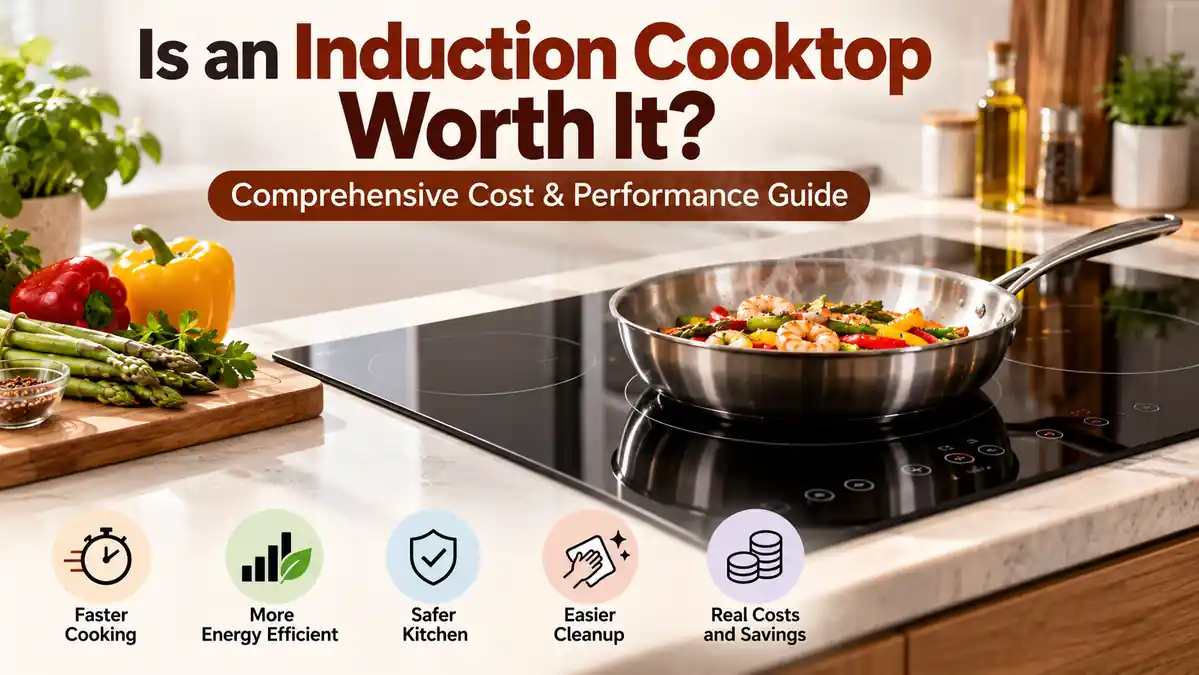
Is an Induction Cooktop Worth It? Comprehensive Cost and Performance Guide

Is an induction cooktop worth the investment? Discover how induction compares with gas and traditional electric cooking, including upfront costs, installation expenses, energy efficiency, cooking performance, safety, and cookware requirements. Explore the key pros and cons to decide whether an induction cooktop is the right upgrade for your kitchen.
Share
Is an induction cooktop worth it? Cost, performance, energy efficiency, and cooking benefits.

Quick Answer: Is an Induction Cooktop Worth It?

Yes, an induction cooktop is worth it for many US households if you value fast cooking, precise temperature control, easier cleanup, and improved energy efficiency, but the upfront cost can range from about $70 for a basic portable burner to $1,000 or more for a premium built-in model, with installation potentially adding hundreds or thousands of dollars.

An induction cooktop uses electromagnetic energy to heat compatible cookware directly instead of heating a burner first. This design helps water boil faster, reduces wasted heat, and makes temperature adjustments more responsive than many conventional gas and electric cooktops.

However, the purchase price is only part of the decision. You may need compatible cookware, a dedicated electrical circuit, countertop modifications, or professional installation if you are replacing a gas cooktop.

For most homeowners, induction makes the most financial sense when replacing an old cooktop or remodeling a kitchen. If your existing gas range works well and you rarely cook, the energy savings alone may not justify replacing it.

  • Best overall reason to switch: Faster cooking and precise temperature control.
  • Best for busy households: Easy cleanup and less heat released into the kitchen.
  • Best for renters: A portable single-burner induction cooktop, provided the rental allows it and the electrical outlet is suitable.
  • Biggest drawback: Upfront equipment and possible electrical installation costs.
  • Best time to upgrade: During a kitchen remodel or when your existing cooktop needs replacement.
01

What Is an Induction Cooktop?

An induction cooktop is an electric cooking appliance that uses a magnetic field to heat compatible pots and pans. Unlike a traditional electric cooktop, it does not rely on a heated coil or radiant element to transfer most of its heat to the cookware.

Most residential induction cooktops have a smooth glass-ceramic surface with clearly marked cooking zones. Some models are portable and contain a single burner, while built-in models typically have three or more cooking zones.

Induction cooktops are available in several configurations:

  • Portable induction burners: Single-zone appliances suited to small kitchens, dorm rooms, temporary cooking stations, and supplemental cooking.
  • Built-in induction cooktops: Countertop-mounted appliances that replace a conventional gas or electric cooktop.
  • Induction ranges: Full-size electric ranges that combine an induction cooktop with an oven.
  • Professional-style induction cooktops: Premium models with larger cooking zones, advanced temperature controls, bridge functions, and higher power output.

For US buyers, the most important distinction is between a portable appliance that plugs into a suitable household outlet and a full-size cooktop that may require a dedicated 208V or 240V electrical circuit.

When you buy through links on our site, we may earn an affiliate commission at no extra cost to you. This helps support our work.

02

How Does Induction Cooking Work?

Induction cooking uses electromagnetism to generate heat directly in compatible cookware. An electrical coil beneath the glass surface creates a changing magnetic field, which induces electrical currents in the cookware's magnetic base. The cookware heats up and transfers that heat to the food.

Here is what happens when you use an induction cooktop:

  • You place a compatible pan on the cooking zone. The appliance detects cookware that meets its requirements.
  • The magnetic field generates heat in the pan. The cookware itself becomes the main source of cooking heat.
  • The food heats quickly. The pan transfers heat to water, oil, vegetables, meat, or other ingredients.
  • You adjust the power level. The cooktop changes its energy output to respond to your cooking needs.
  • You remove the pan. Most models stop or reduce power when suitable cookware is no longer detected.

The glass surface can still become hot from contact with a heated pan, so induction is not completely cool to the touch. However, it generally transfers less heat to the cooking surface than conventional radiant electric cooking.

Why Does Induction Cook Food Faster?

Induction reduces the intermediate heating step. A gas burner heats the pan with a flame, while a conventional radiant electric element heats the glass surface and then the pan. Induction transfers energy directly to compatible cookware.

This can make a noticeable difference during everyday cooking:

  • Boil water faster for pasta, oatmeal, coffee, and tea.
  • Bring soups and sauces to a simmer more quickly.
  • Adjust heat promptly when reducing a sauce or preventing milk from boiling over.
  • Spend less time waiting for cookware to heat up.

The exact performance depends on burner wattage, pan size, cookware construction, the amount of food, and the competing cooktop models. A well-designed gas burner can still perform very well for specific cooking tasks.

03

Induction Cooktop Cost: Purchase Price, Installation, and Long-Term Expenses

The biggest concern for many homeowners is cost. Induction technology can cost more upfront than a basic electric cooktop, and switching from gas can require electrical work. The good news is that you do not necessarily need to replace every pot and pan or renovate your entire kitchen.

The following figures are planning estimates in US dollars, not guaranteed retail prices or contractor quotes.

How Much Does an Induction Cooktop Cost?

Cooktop Type Estimated Price Best For
Portable single burner $50 - $150 Renters, small kitchens, and occasional use
Basic built-in cooktop $500 - $1,000 Budget-conscious kitchen upgrades
Midrange built-in cooktop $1,000 - $2,000 Everyday family cooking
Premium built-in cooktop $2,000 - $4,000+ Advanced controls and premium kitchen designs

Prices depend on the number of cooking zones, bra

nd, power output, dimensions, controls, smart features, and retailer promotions. A full-size induction range with an oven has a different price structure from a standalone cooktop.

How Much Does It Cost to Install an Induction Cooktop?

Installation costs depend heavily on your existing kitchen. Replacing an electric cooktop with a compatible electrical connection can be relatively straightforward. Replacing a gas cooktop may require a new circuit, electrical panel work, countertop adjustments, or changes to the existing gas connection.

Installation Scenario Estimated Cost What May Be Included
Simple replacement $150 - $400 Basic labor and connection to a suitable existing circuit
Replacement with minor modifications $300 - $800 Additional labor, fit adjustments, or minor electrical work
New dedicated circuit $300 - $1,000+ Electrician labor, wiring, breaker, and circuit installation
Major electrical or kitchen work $1,000 - $3,000+ Possible panel upgrades, difficult wiring runs, or extensive modifications

These ranges are illustrative and may overlap. Your actual cost could be lower or higher depending on local labor rates, distance from the electrical panel, building construction, permits, and the condition of your wiring.

Before buying, check the cooktop's installation manual for its voltage, amperage, circuit, and clearance requirements. Many full-size induction cooktops require a dedicated 208V or 240V connection. Do not assume an existing electric or gas connection will automatically meet those requirements.

Do You Need to Buy New Cookware?

Not necessarily. Induction requires cookware with a magnetic base, but many common pots and pans already meet this requirement.

  • Usually compatible: Cast iron, enameled cast iron, and magnetic stainless steel.
  • Potentially compatible: Some stainless steel cookware and selected nonstick pans with an induction-compatible base.
  • Usually incompatible without a magnetic base: Plain aluminum, copper, glass, and ceramic cookware.

Test your existing cookware with a refrigerator magnet. If the magnet sticks firmly to the bottom of the pan, it is a useful first indication that the pan may work on induction. The cooktop's manual and the cookware manufacturer's guidance provide the final confirmation.

If you need new cookware, budget for only the pieces that are incompatible. You may be able to keep your existing cast-iron skillet, stockpot, and several stainless steel pans.

Cookware Situation Estimated Additional Cost Recommended Approach
Most pans already compatible $0 - $50 Keep your current cookware
Need a few replacement pans $50 - $200 Replace only incompatible pieces
Need a new cookware set $150 - $500+ Compare complete induction-ready sets

These are approximate budgeting ranges. You do not need to purchase premium cookware simply because you are switching to induction.

What Is the Total Cost of Switching to Induction?

For a realistic budget, combine the appliance price, installation, and any cookware purchases. If you are converting from gas, request an electrical estimate before committing to a model.

Expense Typical Planning Range Cost-Control Tip
Induction cooktop $500 - $2,000 Compare midrange models before paying for premium features
Installation $150 - $1,000+ Use an existing suitable circuit if possible
Cookware $0 - $200 Test your current pans first
Potential electrical upgrades $0 - $3,000+ Get a site-specific electrician quote

For example, a $1,200 cooktop, $350 installation, and $100 in replacement cookware would total $1,650 before tax or unexpected modifications. If your home needs a new circuit or panel upgrade, the total could be substantially higher.

04

Induction vs Gas: Which Is Better for Everyday Cooking?

Induction and gas both have advantages. Induction excels at fast heating, responsive temperature control, and easier cleanup. Gas offers an open flame, broad cookware compatibility, and the ability to cook without household electricity when the gas supply and ignition arrangement allow it.

Feature Induction Gas
Heating method Electromagnetic heating of compatible cookware Open flame heats the cookware
Boiling speed Usually very fast Can be fast with a powerful burner
Temperature response Fast and precise Fast visual flame adjustment
Energy efficiency Generally higher at the cooking surface More heat escapes around the pan
Indoor combustion emissions No combustion at the cooktop Burning gas produces combustion pollutants
Cookware Requires compatible magnetic cookware Works with most cookware materials
Cleaning Smooth surface is generally easy to wipe Grates and burner components need cleaning
Power outage Generally cannot cook without electricity Depends on ignition, gas supply, and manufacturer instructions

Which Cooktop Is More Energy Efficient?

Induction is generally more efficient at transferring cooking energy to the pan. The US Department of Energy reports that induction appliances can be up to three times as efficient as gas stoves in terms of heat transfer under the cited comparison. ENERGY STAR explains that approximately 85% of heating energy reaches the cookware with induction, compared with roughly one-third for gas.

That does not automatically mean induction will save every household money on utility bills. Electricity and natural gas prices vary by location, and cooking uses a relatively small amount of energy compared with major home systems such as heating, cooling, and water heating.

For a household that cooks frequently, the efficiency advantage is useful. For someone who cooks only occasionally, the savings may be too small to recover a large installation expense.

Which Is Better for Indoor Air Quality?

Induction does not burn fuel at the cooktop, so it avoids the combustion emissions produced by a gas burner. Gas cooking can release nitrogen oxides, carbon monoxide under certain conditions, and other combustion pollutants into indoor air.

However, induction does not eliminate every cooking-related pollutant. Frying, searing, and other high-heat cooking methods can release particles and fumes regardless of the cooktop type.

  • Use a range hood that vents outdoors when possible.
  • Run the hood during cooking and for a short period afterward.
  • Keep the hood and filters clean.
  • Use suitable ventilation when frying, searing, or cooking at high temperatures.

Is Induction Better Than Gas for Temperature Control?

Induction offers rapid power adjustments, making it useful for delicate sauces, melting chocolate, simmering soups, and quickly bringing water to a boil. It can reduce the lag between changing a setting and seeing a response in the pan.

Gas remains attractive to cooks who prefer a visible flame, familiar controls, and broad pan compatibility. Neither technology guarantees perfect results. Cookware quality, pan size, burner design, and cooking technique still matter.

05

Induction vs Traditional Electric Cooktops

Induction is also different from a conventional electric cooktop with radiant glass elements or exposed coils. Both use electricity, but they transfer heat differently.

  • Induction: Heats compatible cookware directly, usually responds quickly, and leaves less residual heat on the cooking surface.
  • Radiant electric: Heats an element beneath the glass, which then heats the cookware. The element and glass can remain hot after cooking.
  • Electric coil: Uses a resistive heating element and is often affordable, though cleaning and temperature response may be less convenient.

Induction is often the best performer if speed and precise control matter most. Conventional electric cooktops can still be a sensible purchase if upfront cost is your priority or you do not want to replace compatible cookware or electrical infrastructure.

06

Induction Cooktop Pros and Cons

Before buying, weigh the everyday benefits against the practical limitations. Induction can improve the cooking experience, but it is not the right fit for every kitchen or budget.

Induction Cooktop Pros

  • Fast heating: Induction can boil water and heat pans quickly, reducing waiting time during meal preparation.
  • Precise temperature control: Responsive power adjustment helps with simmering, searing, and delicate cooking tasks.
  • Higher cooking efficiency: More energy reaches the cookware instead of escaping into the surrounding kitchen.
  • Less ambient heat: The kitchen generally receives less waste heat than with a gas flame or conventional radiant element.
  • Easy cleanup: The smooth glass surface has no burner grates, and spills are less likely to bake onto a hot element.
  • Useful safety features: Many models include pan detection, automatic shutoff, residual-heat indicators, and child locks.
  • No combustion at the cooktop: Induction avoids the pollutants produced by burning natural gas or propane for cooking.
  • Modern design: Built-in induction cooktops offer a streamlined look that works well in contemporary kitchens.

Induction Cooktop Cons

  • Higher upfront cost: A good built-in induction model may cost more than a basic electric cooktop.
  • Possible electrical upgrades: A gas-to-induction conversion may require a dedicated circuit or other electrical work.
  • Cookware limitations: Aluminum, copper, and glass cookware will not work unless designed with a compatible magnetic base.
  • Power dependence: Most induction cooktops stop working during a household power outage.
  • Learning curve: Power settings, touch controls, pan detection, and rapid heating can take time to get used to.
  • Surface care: Glass-ceramic can scratch or crack if mishandled, and repairs can be expensive.
  • Noise: Some pans produce buzzing or humming sounds, and cooling fans may run during or after cooking.
  • Pan-size limitations: Small or poorly centered cookware may not be detected by every cooking zone.
07

Is an Induction Cooktop Safe?

Induction cooktops have several practical safety advantages, particularly for households with children or people who want to reduce accidental contact with an open flame. However, they still require sensible kitchen habits.

Burn and Fire Safety

Because induction heats the cookware directly, the cooking surface generally stays cooler than a conventional radiant electric surface. It can still become hot from the pan, so residual-heat indicators and careful handling remain important.

  • Keep children away from active cooking zones.
  • Use the child lock when the cooktop offers one.
  • Keep towels, packaging, and other combustible items away from hot cookware.
  • Do not leave hot oil unattended.
  • Follow the manufacturer's instructions for automatic shutoff and pan detection.

Are Induction Cooktops Safe for People With Pacemakers?

Induction cooktops generate electromagnetic fields, so people with pacemakers or other implanted medical devices should check the device manufacturer's guidance and ask their healthcare professional about appropriate precautions. Follow the cooktop manufacturer's recommendations for distance, cookware positioning, and safe use.

Does Induction Reduce Kitchen Heat?

Generally, yes. Induction transfers more energy directly into compatible cookware, so less heat escapes into the room compared with many gas and conventional electric cooking setups. The pan, food, and surrounding surfaces can still become hot, especially during high-temperature cooking.

08

Do Induction Cooktops Scratch Easily?

Induction cooktops typically use a durable glass-ceramic surface, but durable does not mean scratch-proof. Sliding rough cookware across the surface, dragging cast iron, or allowing abrasive debris to become trapped beneath a pan can leave marks.

Follow these practices to keep the cooktop looking good:

  • Lift heavy pots and pans instead of dragging them across the glass.
  • Clean the bottom of cookware before placing it on the cooking zone.
  • Wipe up sugary spills promptly according to the manufacturer's cleaning instructions.
  • Use a cleaner and scraper approved for glass-ceramic cooktops.
  • Avoid abrasive pads, harsh scouring powders, and unsuitable cleaning products.
  • Do not place heavy objects on the glass surface.

Some marks that look like scratches may be metal transfer from cookware rather than permanent damage. Use only the cleaning method recommended by the manufacturer to avoid making the problem worse.

09

Who Should Buy an Induction Cooktop?

An induction cooktop is most appealing when its speed, control, and convenience solve everyday problems in your kitchen.

Induction Is a Good Choice If You:

  • Cook several meals a day and value fast heating.
  • Want precise control for simmering, sauces, and temperature-sensitive recipes.
  • Prefer a smooth surface that is easy to wipe down.
  • Want to avoid burning gas inside your kitchen.
  • Are remodeling your kitchen or replacing a failing cooktop.
  • Already own compatible cookware or are comfortable replacing a few pieces.
  • Have an appropriate electrical connection or can upgrade it at a reasonable cost.

You May Want to Keep Gas or Choose Conventional Electric If You:

  • Have a working gas cooktop and would need expensive electrical modifications.
  • Cook only occasionally and place little value on faster heating.
  • Own extensive nonmagnetic cookware that you do not want to replace.
  • Prefer an open flame for particular cooking techniques.
  • Need a cooking option that can operate during some power outages and do not have a suitable backup plan.
  • Are renting and cannot make permanent electrical or countertop changes.
10

How to Choose the Right Induction Cooktop

Do not choose an induction cooktop based on price or appearance alone. Compare the features that affect your daily cooking, your electrical setup, and the space available in your kitchen.

Check the Size and Cutout Dimensions

Measure the existing countertop opening before ordering a built-in cooktop. Common US cooktop widths include 30 and 36 inches, but the exact dimensions and required clearances vary by model. A replacement may require countertop modifications even when the nominal width matches.

Review Power and Electrical Requirements

Check the cooktop's installation instructions for voltage, amperage, circuit protection, and wiring requirements. Have a qualified electrician assess the existing circuit if you are unsure whether it can support the appliance.

Compare Cooking Zones and Controls

  • Choose enough cooking zones for the number of pans you use at once.
  • Look for a bridge function if you often use a griddle or long cookware.
  • Check whether the lowest setting provides a stable simmer.
  • Consider physical controls if you dislike touch-sensitive interfaces.
  • Look for pan detection, child locks, and residual-heat indicators.
  • Check warranty coverage, repair availability, and replacement-part costs.

Consider Noise and Cookware Compatibility

Read owner reviews for comments about fan noise, buzzing, and control usability. These issues can vary by model and cookware, so they are worth checking before purchase.

If possible, test your existing cookware with a magnet and confirm that the manufacturer approves it for induction. This simple step can help you avoid an unnecessary cookware replacement budget.

11

Final Verdict: Is an Induction Cooktop Worth It?

For many US households, an induction cooktop is worth the investment because it combines fast heating, responsive temperature control, easier cleanup, and better cooking-energy efficiency. It can also reduce combustion-related pollution inside the home compared with gas cooking.

The decision becomes less straightforward when the conversion requires expensive electrical work. Lower energy use alone may not repay a large installation bill, particularly for households that cook infrequently.

  • Best for performance: Induction offers fast heating and precise control.
  • Best for easy cleanup: The smooth glass surface simplifies everyday maintenance.
  • Best for budget-conscious upgrades: Consider a portable burner or a straightforward replacement when the electrical infrastructure is already suitable.
  • Best reason to delay switching: A working gas cooktop combined with costly electrical modifications can make immediate replacement difficult to justify financially.

Our recommendation is to compare the full installed cost rather than the appliance price alone. Check your electrical requirements, test your cookware, and get an installation estimate before purchasing. If the total fits your budget, induction can be a worthwhile long-term kitchen upgrade.

12

Frequently Asked Questions

Is an induction cooktop worth it compared with gas?

An induction cooktop is worth considering if you want faster heating, precise control, easier cleanup, and higher cooking-energy efficiency. Gas remains appealing if you prefer an open flame or want to avoid electrical conversion costs. The better option depends on your cooking habits, installation budget, and preferences.

How does induction cooking work?

Induction cooking uses a changing electromagnetic field to generate heat in compatible magnetic cookware. The pan heats directly rather than relying on a gas flame or a heated electric element. This makes induction fast and responsive.

Do I need new pans for induction?

Not necessarily. Cast iron and many stainless steel pans work on induction if their bases are magnetic. Test your cookware with a magnet; if it sticks firmly to the bottom, the pan may be compatible. Confirm compatibility with the cooktop and cookware manufacturers.

Do induction cooktops scratch easily?

Induction cooktops have glass-ceramic surfaces that resist ordinary wear but can still scratch or crack. Lift cookware instead of dragging it, keep pan bottoms clean, and use approved cleaning products to reduce damage.

How much does it cost to install an induction cooktop?

A straightforward replacement may cost around $150 - $400 for installation, while work involving new wiring, countertop changes, or electrical panel upgrades can cost hundreds or several thousand dollars. Actual costs depend on the home, local labor rates, permits, and the appliance's electrical requirements.

Will an induction cooktop increase my electricity bill?

It will use electricity for cooking, but induction transfers energy efficiently to compatible cookware. Your overall cooking costs depend on electricity prices, cooking frequency, and the gas or electric appliance being replaced. Households switching from gas may see their electricity use rise while gas use falls.

Can I use an induction cooktop during a power outage?

Most induction cooktops cannot operate without electricity. If cooking during an outage is important, consider your home's backup power arrangements and follow all appliance and generator safety instructions.

Can induction cooktops replace gas ranges in US homes?

Yes. A built-in induction cooktop can replace a gas cooktop when the countertop dimensions and electrical requirements are met. A full induction range can replace a gas range, but the electrical circuit, appliance dimensions, and installation requirements must be checked first.

Does induction cooking use less energy than a traditional electric cooktop?

Induction generally transfers more energy directly to the cookware than conventional radiant electric cooking. The actual savings depend on the appliances being compared, the food being prepared, cooking duration, and local electricity prices.

Is induction cooking safe for children?

Induction can reduce some burn risks because the cooking surface is generally cooler than a conventional radiant electric surface. However, hot pans and residual heat remain hazards. Use child locks when available and keep children away from active cooking zones.

Does induction cooking affect pacemakers?

Induction cooktops generate electromagnetic fields. People with pacemakers or other implanted medical devices should follow the device manufacturer's guidance and consult their healthcare professional about safe distances and use.

Is a portable induction cooktop worth buying?

A portable induction cooktop can be an affordable way to try induction without remodeling your kitchen. It is useful for small kitchens, supplemental cooking, and some rental situations, provided the appliance is used on a suitable electrical circuit and according to its instructions.

CoreAdorn is reader-supported. When you buy through links on our site, we may earn an affiliate commission.

0 Comments

Be the first to comment.

Leave a comment

Please use kind words and keep your comment on topic. Comments are reviewed by the CoreAdorn team before they appear.